Quick Answer:
In order to deal with the munchies, prepare balanced meals before taking cannabis, ensure that you have healthy snacks available, drink plenty of water, and watch your portions. THC will enhance your appetite and make food smell and taste better than normal. While you may not be able to prevent cravings altogether, a bit of preparation goes a long way.
Ever had your meal and then suddenly felt hungry again after consuming marijuana? Well, you are not alone since many people feel this kind of craving to eat food, known as the munchies, after taking THC.
In some cases, increased appetite due to cannabis consumption might be good for some patients with medical marijuana. However, in other cases, increased cravings might make it hard for them to have a proper diet.
The good news is that there are several simple steps that one can take to deal with the munchies without having to deprive themselves of all snacks that they love. Here is why cannabis makes people crave more food and how to deal with this problem.
Why Does Cannabis Make People Feel Hungry?
THC, which stands for tetrahydrocannabinol, is the main psychoactive ingredient in marijuana. This compound reacts with the endocannabinoid system within the body, which helps regulate many bodily processes, such as appetite.
Marijuana may change how your brain reacts to the smell and taste of foods. In other words, your favorite foods may become more appetizing, even if you have just eaten.
The effects may vary from person to person. They depend on the quantity of THC consumed, the particular product used, your experience with marijuana, and other biological factors.
Knowing your personal reaction is the key to figuring out how to deal with the munchies.
7 Practical Ways to Manage the Munchies
1. Have a Proper Meal Prior to the Cannabis Consumption
The first approach is to not begin your cannabis consumption in an excessively hungry state.
Have some good meals with protein, carbohydrates, and healthy fats. It could be eggs with whole grain bread, beans with vegetables, or even yogurt with oats and fruits.
Such a meal would keep your hunger at bay longer than the meal consisting of only carbohydrates.
Having a meal before will not eliminate any cravings caused by THC, but it will certainly make it easy to identify true hunger from the need to snack.
2. Prepare Good Snacks in Advance
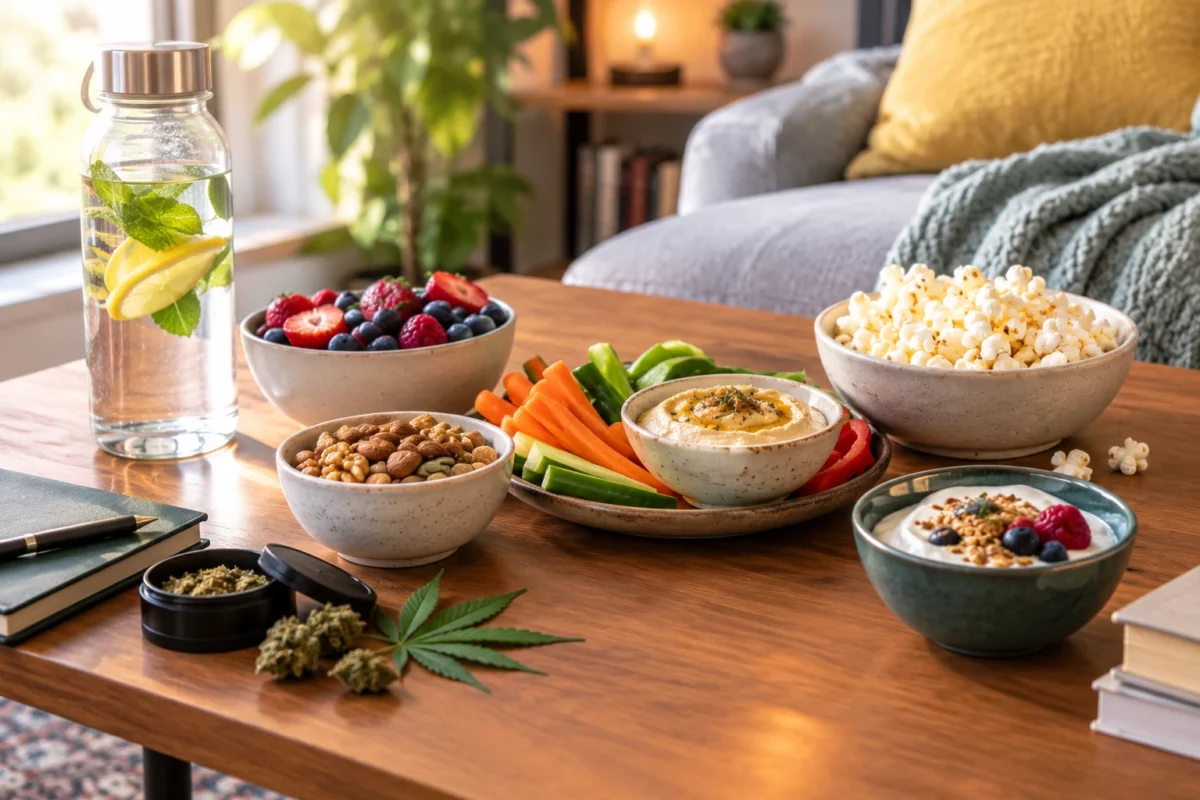
When cravings hit, it may seem easy to just grab whatever is readily available. Having some ready-made options will ensure that you have healthier alternatives.
Here are some ideas to consider:
- Apple slices, berries, or any other fruit
- Carrot and cucumber slices dipped in hummus
- Unsalted nuts or seeds in small amounts
- Popcorn without salt
- Greek yogurt or any other source of protein
- Crackers made of whole grain with an appropriate topping
There is no need to deprive yourself of chips, cookies, or your favorite foods. Instead, put them into a bowl rather than eating directly from the big package.
Planning ahead is a smart way of handling the munchies and eating.
3. Drink Plenty of Water
Having dry mouth is quite typical for people who use cannabis. In some cases, it can result in cravings for drinks and eating food more often.
Drink plenty of water during the whole day. Alternatively, you may try unsweetened carbonated water if you want.
Consuming water does not stop the process of stimulation of appetite by THC. Thirst may not even be the cause of craving in some cases. Nonetheless, hydrating your body is a reasonable step to take.
In case when you constantly drink sugary drinks, opting for water instead can be useful.
4. Portion Size Matters
Cannabis can increase appetite, making it easy to keep eating without being aware of the quantity consumed.
Rather than attempting to use willpower alone, incorporate portioning into your daily routine.
Place an appropriate amount of food on a plate, take a seat and enjoy your meal. If you’re not satisfied after, you can choose to have more.
Make sure to steer clear of eating out of a large bag of snacks while watching TV. Making small adjustments like these can help you cope with your munchies without making every craving a battle.
5. Pick An Activity To Keep Yourself Distracted
In some cases, the temptation to snack can stem from boredom or a habit instead of from true hunger.
If you happen to snack whenever you find yourself in front of the TV, try a different strategy. You can listen to music, solve puzzles, sketch, talk to someone, or pick up a more relaxing hobby that engages you.
If you feel relaxed and safe enough, gentle physical activity might prove helpful too. Do not try driving, cycling in traffic, or activities requiring good coordination and reflexes while impaired.
It is not about ignoring real signs of hunger. It is about identifying whether you grab some food because it became a habit and giving yourself another choice.
6. Maintain a Journal of Your Activities
In the case where you use cannabis due to your medical condition, maintaining a logbook might be helpful in identifying patterns.
Take notes of such details as what product you used, its quantity, time, change of appetite, side effects. After some time, these notes can be used as a discussion point between you and your doctor.
You may find out that under particular circumstances, or using particular products, your cravings become stronger. Nevertheless, your personal logbook can only inform your discussion with your healthcare provider but it cannot prove causation between a certain cannabinoid/strain and effects you have.
7. Discuss Persistent Cravings With Your Healthcare Professional
If the increased appetite is affecting your life, weight management plan, or medical treatment, talk to the practitioner overseeing your treatment.
The practitioner can go through your product, THC concentration, dosage, timing, medications, and treatment goals. In certain cases, they can discuss whether a new way of treatment is better for you.
Do not assume that high-CBD or THCV content products will always stop the munchies from happening. Scientific research in the field is currently underway, and different products can work differently for different users.
Personalized consultations are a more secure option than switching to products according to strain descriptions.
Can You Prevent the Munchies Completely?
There is no surefire way of preventing cannabis-induced appetite changes.
While some individuals will feel strong cravings, others might not really feel anything different. The extent to which it happens will depend on the amount taken as well as the contents of the product.
To avoid the munchies, concentrate on what you can do. Plan your meals, have easy snacks available, pay attention to portions, drink plenty of water, and maintain a schedule.
Do not take more cannabis in order to produce the desired results regarding appetite changes. THC can make you feel anxious, confused, and impaired.
Important Safety Considerations While Using Medical Cannabis
Controlling appetite is just one aspect of responsible cannabis use.
Remember these safety tips:
- Exercise caution with edibles: The effects may take 30 minutes to two hours to kick in, and the duration may be longer than you expect. Don’t take any extra amount just because you have not felt anything yet.
- Secure your products: Store cannabis products in their original and properly labeled containers and away from reach of children and pets.
- Do not combine substances: Alcohol and other substances can enhance impairment or create new hazards.
- Do not drive under the influence: Cannabis may impact your reaction time, coordination, and decision-making.
- Consult an expert: Consult a qualified health professional about any side effects or issues regarding appetite.
Following these steps can help you make better choices when using cannabis.
Frequently Asked Questions
Why do I get hungry after using cannabis?
THC may affect the mechanisms related to appetite and cause food to smell and taste more appetizing. The intensity of this reaction differs among people.
What snacks are suitable for combating cannabis urges?
Fruits, vegetables with hummus, yogurt, nuts, and packaged popcorn are easy-to-get snacks. You need to select snacks according to your dietary requirements.
Does water prevent the munchies?
Drinking water is important for hydration but does not help to avoid hunger caused by THC. It is reasonable to have water at hand, especially if you have a dry mouth issue.
Is CBD able to prevent cannabis-related hunger?
Currently, there is no sufficient evidence to claim that CBD can prevent an increase in appetite caused by THC. Consult your doctor before making changes in your products.
Is it advisable for medical cannabis users to eat when they feel hungry?
No, hunger is a normal bodily response, and in some cases, patients might actually benefit from increased appetite. All that matters here is to sustain healthy eating patterns which work for you as an individual person.
Conclusion
To learn how to cope with the munchies is not to abstain from all temptations and battle every urge. The better strategy will be to plan healthy meals, keep healthy snacks at hand, drink enough water, and be mindful about your eating patterns.
In case changes in appetite become too hard to control, consult with your doctor about your situation and possible ways out. Having prepared beforehand and being reasonable about your expectations, you’ll be able to make wiser decisions and consider your general health.
Struggling to Manage Cannabis-Induced Munchies?
Cannabis can affect your appetite, eating habits, and overall experience. If you use medical marijuana and find it difficult to manage increased hunger or other side effects, a qualified healthcare professional can help you explore suitable options.
>>Apply for Your Medical Marijuana Card<<
Sources
- Centers for Disease Control and Prevention (CDC). About Cannabis
- Centers for Disease Control and Prevention (CDC). Cannabis and Poisoning
- Centers for Disease Control and Prevention (CDC). Cannabis and Public Health: Health Effects
- National Center for Complementary and Integrative Health (NCCIH). Cannabis (Marijuana) and Cannabinoids: What You Need To Know