Short Answer:
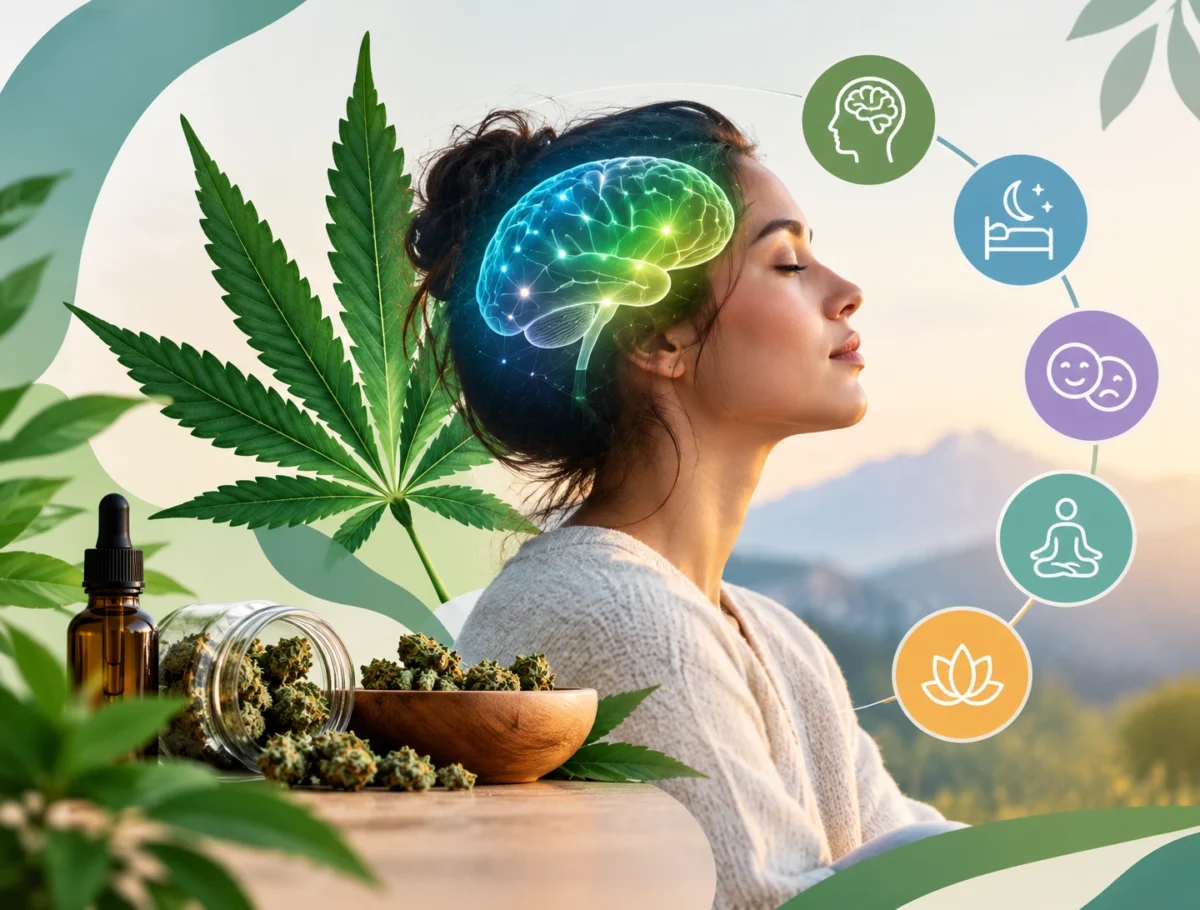
Cannabis and Mental Health This is an emerging field of scientific research due to the fact that many individuals use various products of cannabis for treating their problems such as anxiety, insomnia, and stress. Nonetheless, there is little evidence to show its effectiveness, and cannabis can also cause problems such as making anxiety worse, bringing about paranoia, and psychosis in some people.
It influences the way you think, your emotional state, your capacity to cope with stress, and social connections. Examples of conditions are anxiety disorders, depression, and post-traumatic stress disorder (PTSD).
Now that individuals investigate diverse methods of coping with their issues, cannabis and mental health became a popular theme in scientific investigations. There are various substances in the plant, like THC and CBD, which act on the human body differently.
There are cases when people felt calmer after consuming cannabis, and there are cases when they felt more anxious and had negative psychological effects. This fact explains why the cannabis shouldn’t be considered as a universal method of treatment.
Scientific research is ongoing, and the current information does not suggest that cannabis should be used as a proved replacement of the existing treatment. Everyone who thinks about using cannabis in their health issue should consult a professional specialist.
Explore Your Medical Cannabis Options
Curious whether medical cannabis may be appropriate for your needs? Learn about the potential benefits, risks, and eligibility requirements before making a decision. A qualified healthcare professional can help you understand your options and make an informed choice.
>>Get Your Medical Marijuana Card Today<<
How Are Cannabis and Mental Health Connected?
The interaction of cannabis with emotions is a rather complex issue. The endocannabinoid system is involved in regulating a number of bodily processes such as mood, memory, stress, and sleep.
THC is the key intoxicant found in cannabis. It may influence perception and mood, however, it is possible that the effects of it will differ based on such factors as the dose, potency of the product, the regularity of using cannabis and individual sensitivity. CBD is not intoxicating as THC but may still cause some side effects and interact with medications.
As it was mentioned by the National Center for Complementary and Integrative Health (NCCIH), research in the field of using cannabinoids for various diseases is quite poor. Positive findings regarding the benefits of cannabis from some disease do not imply its effectiveness for a particular mental disorder.
This means that the examination of the interaction of cannabis with mental health should be done condition by condition.
Can Cannabis Help With Anxiety?
Anxiety is associated with constant worries, nervousness, restlessness, and inability to relax. There are some claims that cannabis helps to feel more relaxed, but there is no scientific proof.
The NCCIH reports that only a few human studies showed that CBD helped in reducing anxiety in certain cases. For instance, the effect of CBD on anxiety was observed in one small study in patients with social anxiety disorder who were less anxious during simulated public speaking test after taking CBD. However, a small study does not prove that CBD is a dependable treatment option for anxiety disorders.
The effects of THC are likely to be opposite since it can cause nervousness, panic attacks or paranoia.
When you are interested in using Cannabis and Mental Health issues due to anxiety problems, it should be clear that you do not treat the problem itself, but rather experience temporary relaxation. A professional can assist in exploring evidence-based options, such as psychotherapy and medications.
Cannabis and Depression: What Should You Know?
Depression affects a person’s mood, motivation, energy levels, sleep, appetite, and ability to be interested in regular activities. Even though cannabis is consumed by individuals who want to overcome negative feelings, the current research literature does not confirm that cannabis helps with depression.
The Centers for Disease Control and Prevention found correlations between cannabis use and depression, social anxiety, and other mental disorders. They do not mean that cannabis triggers all these disorders, but there are different factors that affect the connection. It is significant when assessing the risk.
It might also have adverse effects on memory, attention, and daily activities, preventing some individuals from having regular habits.
If one is considering cannabis and mental health, it is recommended to contact a specialist if someone experiences persistent sadness, hopelessness, or lack of interest in things in life.
It is possible that the help includes psychotherapy, medication, lifestyle changes, or some combinations that suit an individual.
Could Cannabis Affect PTSD and Sleep?
Post-traumatic stress disorder (PTSD) can occur after a traumatic experience. PTSD can involve intrusive memories, nightmares, avoidance, hyperalertness, and insomnia.
Some individuals with PTSD have reported taking cannabis as a way to control their nightmares or aid sleep. Personal accounts, however, cannot prove the safety or efficacy of a treatment method.
According to the NCCIH, research into the impact of cannabis and cannabinoids for PTSD treatment is lacking, with studies failing to show significant benefits. Additionally, Cannabis and Mental Health can lead to undesirable side effects and THC can be problematic for people experiencing anxiety and other psychiatric symptoms.
There are some instances where sleep will change for a short period of time. Specific types of Cannabis and Mental Health may influence sleepiness or latency but there is a variance in results. Furthermore, it is hard to know if improved sleep in a study was caused by cannabis or by another factor such as relief of pain.
For individuals looking into Cannabis and Mental Health well-being, it is particularly critical to get professional help if their symptoms are persistent and interfere with their everyday life. Patients should consult a doctor before stopping or changing their current PTSD or sleep medication.
What Are the Mental Health Risks of
Cannabis impacts different people differently. Some individuals might have adverse psychological effects, even when consuming cannabis in order to feel relaxed.
Risks to consider:
- Anxiety and panic attacks: Cannabis, mainly THC, can exacerbate anxiety feelings in certain individuals.
- Paranoia and disorientation: Intoxication might cause disturbing thoughts or alterations in perception.
- Increased risk of developing psychosis: Cannabis consumption increases the risk of experiencing psychosis, specifically when there is early and frequent usage of the drug. There might be an increased risk in individuals with predisposition to such disorder.
- Learning disabilities: Learning difficulties, including memory impairment and decreased attention span.
- Medications interactions: CBD and other cannabinoids can interfere with the effects of prescribed drugs.
According to CDC information concerning cannabis and its impact on mental health, there is an increased connection between cannabis consumption and the development of psychosis in individuals who consume cannabis at younger age and do so regularly.
The aforementioned considerations don’t imply that everybody will experience negative effects as a result of cannabis consumption. However, the aforementioned considerations should be taken into account while considering the consumption of cannabis.
How to Consume Cannabis Safely
If you are considering Cannabis and Mental Health products for a health condition, consult with a professional first and discuss your symptoms, currently used Cannabis and Mental Health products, as well as medications and supplements.
Here are some helpful tips to keep in mind:
- Never discontinue any prescription medication for mental illness on your own.
- Never assume that the label “natural” or “CBD” makes the product entirely safe to consume.
- Research the ingredients and the amounts of cannabinoids contained in the product if there is reliable information.
- Remember that THC potency, dosage, and usage frequency affect the effect of the product.
- Consider professional assistance if your symptoms worsen or disrupt your daily activities.
Cannabis is subject to different regulations depending on a location. Check your local regulations before purchasing or using Cannabis and Mental Health products.
Readers who consider using medical Cannabis and Mental Health should consult with a licensed healthcare professional to learn about eligibility criteria and regulations as well as risks involved with cannabis use in specific cases.
Frequently Asked Questions
Can cannabis be used to treat mental disorders?
Cannabis and Mental Health has not been scientifically proven as an effective treatment for mental disorders. Discuss other treatment options with your health care provider.
Is CBD better for anxiety than THC?
There is some evidence that CBD might help ease anxiety in certain cases, but side effects are possible.
Does cannabis worsen anxiety?
Yes, some users report increased levels of anxiety and paranoia when taking THC.
Is cannabis safe for patients with depression?
There is no scientific proof that cannabis is a good treatment for depression. Talk to your health care provider about appropriate treatments.
Sources
- Veriheal — Cannabis + AI: The Future of Personalized Weed Prescriptions
- National Institute of Standards and Technology — Trustworthy and Responsible AI
- U.S. Food and Drug Administration — Artificial Intelligence-Enabled Medical Devices
- U.S. Food and Drug Administration — Considerations for the Use of AI to Support Regulatory Decision-Making for Drug and Biological Products