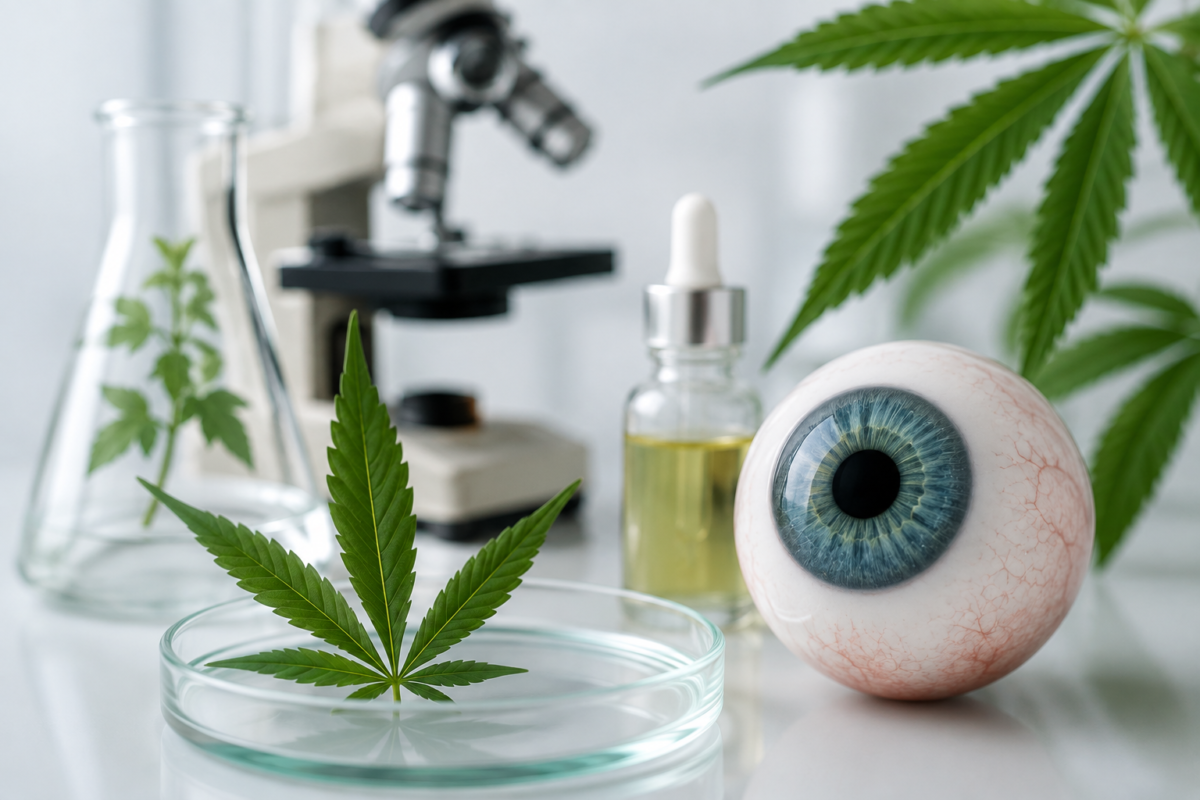
Cannabis Research has gotten attention in medical research especially research that looks at the eyes and the way people see. Scientists have found receptors and signals related to cannabinoids in parts of the eye.
This scientific interest does not mean that cannabis is a proven treatment for eye diseases. The evidence is still not enough for conditions. Researchers are still looking into how safe and how well cannabinoid-based treatments work. They are also studying how much to use and how to give it. A big review of treatments with cannabinoids, for the eyes points out that glaucoma, uveitis, diabetic retinopathy, keratitis and other areas are being studied. The review also shows that there are challenges when it comes to delivering the drugs properly.
The Eye And Cannabinoid Activity
The eye is a complicated thing that helps control the pressure inside it the blood flow and how it deals with inflammation and sends signals to help us see. Scientists have found that there are cannabinoid receptors in parts of the eye like the retina, the ciliary body, the iris and the trabecular meshwork.
This is important because cannabinoid receptors are found in the retina the body, the iris and the trabecular meshwork which means that cannabinoids may have an effect on several things that help keep the eye healthy. Researchers are looking into how cannabinoidsre related to things like
- intraocular pressure regulation
- retinal signaling
- inflammatory activity
- nerve-cell protection
- ocular blood flow
- corneal health
All of these connections between the eye and cannabinoids are interesting and have created opportunities for scientists to do more research on cannabinoids and the eye. However they do not mean that cannabis products can be used to treat eye diseases in people. The eye and cannabinoid activity need to be studied in clinical trials to see if the things scientists have found in their labs can really be used to create safe and reliable treatments, for eye diseases and help people with eye problems.
Glaucoma remains an area of research
Glaucoma has been linked with cannabis research for many years. Researchers found that some cannabinoids, THC can reduce intraocular pressure, which is a key part of managing glaucoma.
This effect comes with a big problem. A review from 2024 showed that cannabinoids can lower pressure but the drop does not last long. The scientists also found issues with side effects and the fact that there are not good ways to deliver these substances to the eyes. The review said that the current evidence is not enough to suggest using cannabinoids as a treatment for glaucoma.
Long-term eye problems need ways to manage them. A quick change in eye pressure does not always mean long-term protection for the nerve in the eye.
Because of this current care for glaucoma still depends on the surgical methods that eye doctors recommend.
Short-Term Effects Create Treatment Challenges
One of the problems when trying to create a treatment for glaucoma using cannabinoids is keeping the effect useful for enough time.
Cannabinoids might affect eye pressure. Scientists need treatments that work consistently without causing bad side effects. Earlier studies and recent reviews have shown several issues, including effects on the whole body mental changes from some substances and problems getting cannabinoids to the right place, in the eye.
Researchers are still looking for ways to give the medicine that could help it work better in the eyes and avoid bad effects.
Research Into Ocular Inflammation
Inflammation can cause eye problems. Scientists have looked into cannabinoid compounds because some cannabinoids have demonstrated -inflammatory effects in experiments.
This has led to interest in uses for conditions like uveitis and keratitis. Summaries of cannabinoid-based eye treatments point to these areas as topics of continued study even though many important questions about the ways to make the treatments and their results are still not solved.
Inflammatory eye conditions can affect vision, which makes getting the right diagnosis very important. Cannabis should not take the place of treatment for serious eye inflammation.
The Importance of Safe Ocular Drug Delivery
Creating medicine for the eye comes with difficulties. The eye has barriers that can make it hard for a drug to get to the right place and stay there in the right amount.
Cannabinoids can add difficulties because of the way they are made.
Scientists who are working on cannabinoid-based eye treatments have focused on making improvements in:
- Solubility
- Drug stability
- Local absorption
- Tissue penetration
- Controlled release
- Reduction of exposure
These difficulties explain why just showing that a cannabinoid has some effect, in the body does not mean it will work as an eye medicine. Scientists also need to create a way to give the compound safely and in a way.
CBD and Commercial Eye Products Require Caution
Products marketed with cannabis or CBD claims may appear appealing to people searching for alternative eye-care options. However, eye products require careful formulation because the eye is highly sensitive.
The available scientific evidence does not support treating ordinary CBD products as proven therapies for glaucoma, retinal disease, or other serious eye conditions.
Standard cannabis oils, tinctures, and products designed for other routes of use should not be assumed safe for direct application to the eye. Cannabinoid researchers themselves have identified the difficulty of creating suitable ophthalmic formulations.
Any eye product should be used according to appropriate medical guidance.
Future Opportunities in Cannabinoid Ophthalmology
The limitations of current research do not mean that cannabinoid science has reached a dead end.
Scientists continue studying the endocannabinoid system and possible cannabinoid-based therapies for eye conditions. Areas of interest include pressure regulation, neuroprotection, inflammation, corneal health, and retinal disease.
Future progress may depend on several factors:
- Larger human clinical trials
- Better understanding of cannabinoid mechanisms
- Improved ophthalmic drug formulations
- Safer local delivery systems
- Longer-lasting therapeutic effects
- Clearer information about long-term safety
Some of the most promising future developments may involve carefully designed medicines rather than conventional cannabis consumption methods.
The goal of medical research is not simply to determine whether a compound has an effect. Researchers must establish whether that effect produces meaningful benefits for patients and whether the treatment can be used safely.
Responsible Medical Guidance Matters
People interested in medical cannabis should make healthcare decisions based on reliable information and professional guidance.
Medical Cannabis Card Sandiego helps eligible individuals move through the medical cannabis evaluation and card process. A proper evaluation allows patients to discuss their situation and explore medical cannabis options responsibly.
Serious eye conditions still require specialized care.
Anyone experiencing significant changes in vision, severe eye pain, sudden flashes, a rapid increase in floaters, or loss of vision should seek prompt medical attention. Cannabis should never be used as a substitute for diagnosis or treatment from a qualified eye-care professional.