Quick Answer:
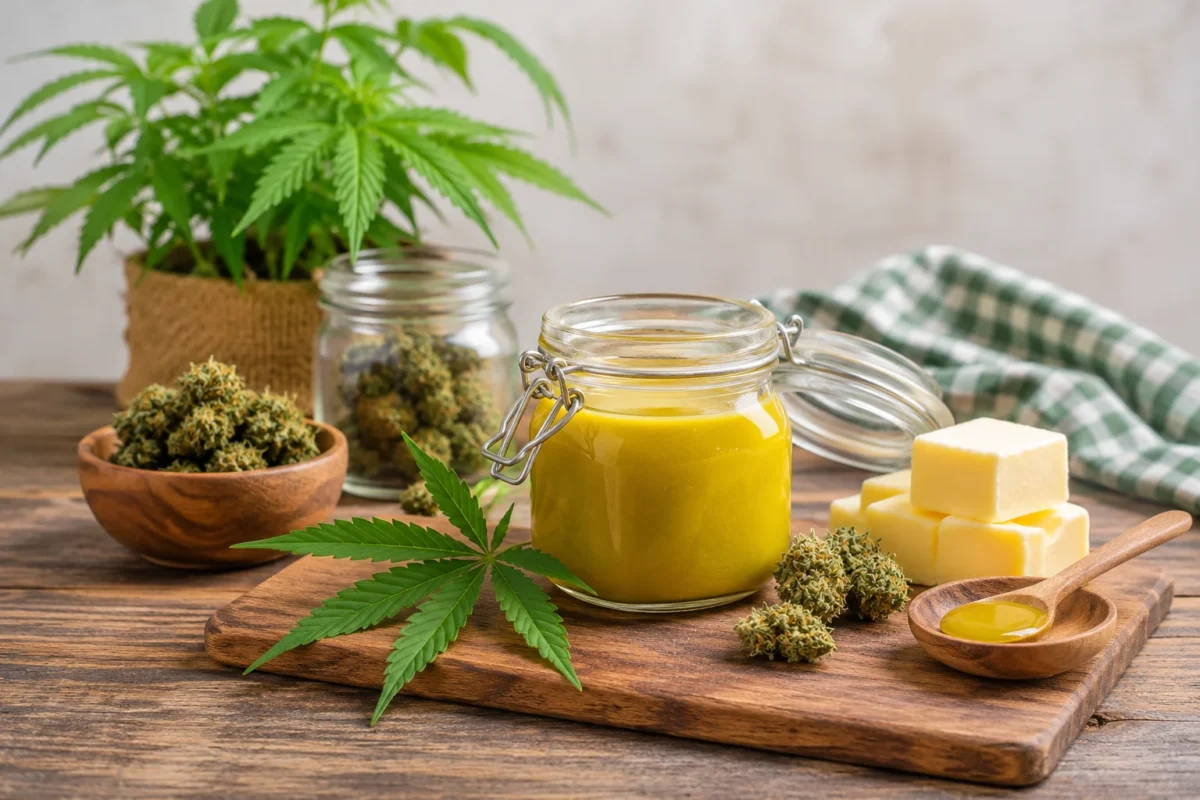
Cannabutter is simply butter infused with cannabis. It is a popular choice for making your own edibles such as brownies, cookies, cakes, and various recipes. The cannabutter helps as a good medium for infusing cannabis as THC and many other cannabinoids are fat soluble.
Cannabis can be used in many forms such as dried flower, oils, tinctures and edibles. Cannabutter is one of the most well-known ingredients to make your own edibles with. It can be used as a great substitute in many recipes. Rather than having to add cannabis to your recipe you can use cannabutter.
In order to understand cannabutter you must also know why cannabinoids react with fats. You should also know why decarboxylation matters, how storage will affect your product and why extra caution must be taken when creating edibles at home. When creating edibles at home there is no guarantee of how much THC the product has without professional testing.
What Is Cannabutter?
Cannabutter is one of the products that result from mixing cannabis with butter. It is used in dishes, where regular butter is needed. For example, it can be used in baking, sauces, and some desserts. Since THC is fat soluble, it can attach to fat in butter during infusion, which is why butter is often used as the base for cannabis-infused products.
The appearance, flavor, and cannabinoids’ composition of cannabutter may depend on the ingredients, methods of preparation, and starting materials. Some types of cannabutter may have a slightly different taste or consistence from the usual butter. It is also necessary to note that the amount of cannabis in a batch is not the exact measure of the amount of THC in it.
Why Is Butter Used for Cannabis Infusion?
Butter consists of fats, which make it a good component for infusion. As mentioned before, THC and other cannabinoids are lipophilic, and that is why butter and some cooking oils are often mentioned as bases for infused dishes.
Butter is known for its pleasant flavor and consistence. There are people who use coconut oil as an alternative, and some of them use olive oil for their dishes, where solid butter
Ingredients and Equipment for Cannabutter
The basic cannabutter recipe will require some unsalted butter and cannabis flower. If you’re making a particular recipe you may find that adding some sunflower lecithin helps. This is an emulsifier, so can help blend the ingredients together. It isn’t necessary for all recipes though.
Commonly used kitchen equipment includes:
- Saucepan or appropriate slow cooker.
- Thermometer safe bowl.
- Thermometer.
- Fine sieve.
- Cheesecloth.
- Clean, airtight container.
- Baking items if decarboxylation needed.
Ensure your items are clean and any appliances or cooking items should be as per manufacturer instructions. Ensure that any containers you use aren’t damaged. Don’t use inappropriate plastics with hot ingredients. Ensure children and pets are kept away from the area.
Understanding Decarboxylation Before Making Cannabutter
Cannabinoids are found in raw cannabis flowers. These include THCA. This can be decarboxylated when heated. A carboxyl group is removed from THCA causing it to become THC. This is why the process of decarboxylation is often talked about with edible cannabis products and other ingestible products.
Various factors will influence how well this will work such as heat, time, humidity and the type of cannabis used. Too much heat can cause unwanted reactions to occur. To learn more about this chemical reaction check out our guide to cannabis decarboxylation.
How to Make Cannabutter
Many different methods can be used to make cannabutter. Both the stove top and slow cooker methods are explained in our guide below. However, there can be variations in how good the cannabutter turns out. Due to the ratios in the recipe or how long it is cooked for, you can’t guarantee how strong the THC levels will be unless it has been tested in a lab.
Stovetop Method
Melting the butter and the prepared cannabis in a saucepan. You need to be very careful with this method as the butter could easily go brown or burnt. Too high a temperature can also cause issues with the cannabinoids. Using an appropriate thermometer can help, however it won’t tell you how much THC has moved into your butter.
Once your infusion has finished you will need to strain your cannabutter through an appropriate strainer and cheesecloth. Once your cannabutter has been made you want to be careful when putting it into a clean container.
Slow Cooker Method
A slow cooker is a much more controlled method. Some recipes use a heatproof jar inside a water bath to help reduce the direct contact with the heat source. However slow cookers can vary in their temperature.
You will need to be careful when putting your cannabutter into a suitable container. Heating for longer doesn’t mean you will get a much stronger product. It can cause the cannabutter to change colours and taste. Without testing you won’t know how strong the cannabinoids are.
How to Use Cannabutter in Different Recipes
As well as being super versatile, you’ll find cannabutter can be used in recipes where butter would normally be used. How your final product tastes will depend on the ingredients in the food, how it’s cooked and how much cannabutter you’re using. However, you shouldn’t assume that your baked item will have even distribution of THC.
Popular recipes to try include;
- Brownies and cookies – classic baked items which usually contain butter.
- Cakes and icing – can be added to cake mixes, fillings or icing.
- Savoury dishes – some sauces or ready meals will include butter.
- Toast and spreads – sometimes used as a spread but always make sure the cannabutter items are clearly labelled.
Don’t add cannabutter to food that you’re giving to someone else without making them aware. Never mistake it for normal butter.
How to Store Cannabutter Properly
Proper storage will help keep your cannabutter safe and fresh. As homemade cannabutter may contain some moisture and plant matter, it should be stored in a clean airtight container in the fridge.
If you want to store your cannabutter for longer, you can also freeze it if possible. The length of time that it can be stored depends on what you’ve used, how clean it was made, and how much moisture and consistent temperature it has been kept at. It can be difficult to know for sure how long your homemade cannabutter will keep, so if you see any mould or strange smells then it should be thrown away.
Things to consider when storing:
- Store in a clean airtight food safe container.
- Clearly label it as being infused with cannabis.
- Store appropriately in the fridge using safe food storage methods.
- If freezing, make sure you use a freezer safe container.
Keep locked up out of reach of children, pets, and those who may think it’s normal butter.
How strong is homemade cannabutter?
When making your own cannabutter the strength can be tricky to determine. The THC levels can be influenced by the original percentage of THC within the cannabis flower, how much you are using and how you are making it. Because of this, you may find that two batches made with the same ingredients do not have the same amount of THC.
This can be very important if you are dividing your cannabutter up into several portions. Simply adding cannabutter into a large recipe doesn’t mean that there will be an even distribution of THC throughout your cookies/brownies. Products that have been tested by companies may give you more accurate information about how strong they are due to regulated labelling. However, you should always expect home-made cannabutter to be unpredictable.
Tips for Safety When Taking Cannabis Edibles
When consuming cannabis in food form, it can take longer to feel any effect. The effects may take between 30 minutes to 2 hours to kick in and can take up to 4 hours to feel the full effects (Health Canada). This can cause you to put more into your body than you should.
It is important to be responsible when making, storing and eating cannabis edibles. If you decide to try cannabis edibles where legal, start with a small amount, wait until you understand how much you can take and remember that everyone reacts differently. Never drive or use any machines after taking cannabis and do not mix with alcohol or other intoxicants.
The main things to take note of:
- Label infused foods clearly.
- Store all cannabis items securely.
- Never give someone cannabis-infused food without their knowledge.
- Do not eat any extra until you know the effects you will get.
If you are on medication or have a medical condition, seek medical advice on whether cannabis could interact with your medication.
Why You Should Seek Medical Advice
There are differences between different products available. If you are considering using cannabis for a medical reason it is important to understand that home-made edibles aren’t medically regulated and can have varying amounts of THC. A qualified health care professional can provide information about risks, interactions and if Medical Cannabis may be suitable.
If you are looking into a Medical Marijuana Card or Medical Cannabis Recommendation you may also have questions around what types of products are available and what is required locally. Talking to qualified Medical Marijuana Doctors can provide you with the relevant information around your health and what options are available. When looking into a Medical Cannabis Card or Medical Marijuana Certificate please ensure you follow the correct requirements for your state and talk to a professional.
Frequently Asked Questions
What Is Cannabutter?
Cannabutter refers to butter with cannabis added to it. It is often used in home-made edibles such as brownies, cookies, cakes and some savoury dishes. The amount of cannabinoids can vary.
Why Use Butter?
Butter has fat in it and since THC is fat soluble it is often used as a base in cannabis recipes. Coconut oil and some other fats may be used.
Can It Be Used In Any Recipes?
Whilst cannabutter can be used in many recipes where butter would be used, it can not be used in everything. Depending on what you are cooking the temperature can cause issues, how compatible the ingredients are and how well the cannabutter distributes. The amount of cannabinoids can also change.
How Long Will Cannabutter Last?
Cannabutter made at home can last varying amounts of time depending on how you store it. How moist it is, how clean you make it and the ingredients will all play a part. Store in an airtight container of appropriate size and keep in fridge/freezer. If you notice any signs of it going off then throw it away.
How Long Will Edibles Take To Kick In?
Edibles can take between half an hour to two hours to start showing effects. It can take up to four hours for them to fully kick in. Everyone will be different and depends on the product. Eating more can increase the chances of a bad experience whilst waiting for effects.
Is Home Made Cannabutter The Same As Store Bought?
No. Store bought cannabutter can be made under regulated conditions and tested in laboratories depending on where you live. Cannabutter made at home generally will not have verified amounts of cannabinoids meaning it is less consistent with potency and serving sizes.
Conclusion
Cannabutter is a useful ingredient that can be used for a range of home recipes. Knowing more about fats, decarboxylation, preparation and storage will help you understand what makes cannabutter different to normal butter. However, there is no guarantee to what levels of THC you will get and effects can be hard to predict.
Explore Medical Cannabis With Professional Guidance
Learning about cannabis products can help patients make informed choices. Speak with a qualified healthcare professional about their potential benefits and risks.
>>Get Your Medical Marijuana Card<<