Quick Answer:
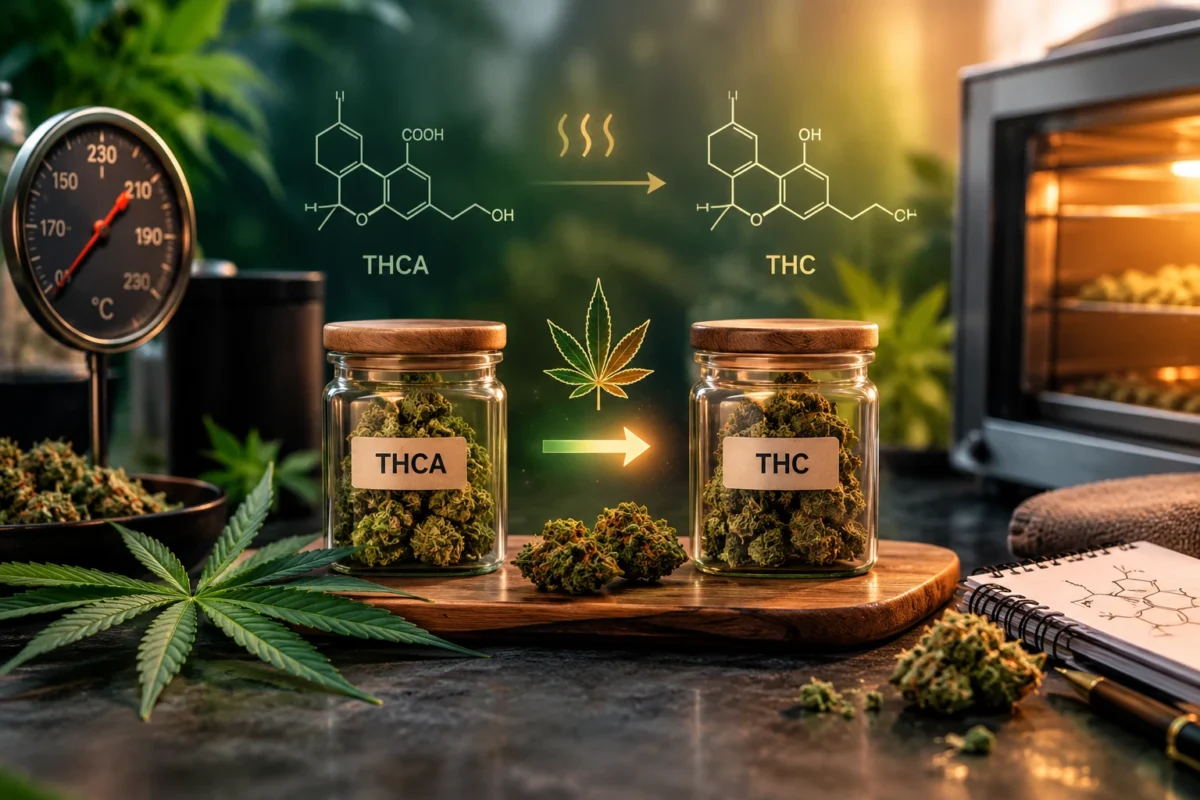
Cannabinoid Decarboxylation is the chemical reaction where heat is used to change acid-based cannabinoids like THCA and CBDA into their neutral counterparts, THC and CBD. It is a significant factor in making certain cannabis products, particularly those made at home.
There are several naturally occurring compounds found in cannabis, known as cannabinoids. The most well-known include THC and CBD, which are often mentioned in association with medical cannabis and wellness products. But, the cannabis plant mostly produces these cannabinoids in an acidic form, such as THCA and CBDA.
This is where the process of Cannabis Decarboxylation comes into play. This refers to the chemical reaction that occurs when heat causes the removal of a carboxyl group from the acidic cannabinoid. This process may affect the chemical makeup of cannabis and is especially relevant to cannabis products meant for oral consumption.
Whether you are interested in cannabis chemistry or in the process of making cannabis products, the knowledge of Cannabis Decarboxylation will come in handy.
What Is Cannabis Decarboxylation?
Cannabis Decarboxylation is a chemical process where heat facilitates the removal of a carboxyl group from an acidic cannabinoid compound. In this chemical process, carbon dioxide is produced and an acidic cannabinoid turns into its neutral form.
The two most common conversions include:
- THCA to THC: Tetrahydrocannabinolic acid (THCA) turns into delta-9-tetrahydrocannabinol (THC).
- CBDA to CBD: Cannabidiolic acid (CBDA) turns into cannabidiol (CBD).
THCA and CBDA are natural components of fresh cannabis plant material. Under appropriate heating conditions, some of these acids turn into neutral compounds.
It is important to realize that the Cannabis Decarboxylation process does not mean that all cannabinoids will turn into neutral compounds. It is the final chemical composition that depends on various factors like temperature, heating time, material features, and oxygen exposure.
Why Is Cannabis Decarboxylation Important?
Cannabis Decarboxylation is important because it alters the chemical state of cannabinoids. This becomes particularly important where cannabis is used in products which are either heated or meant to be taken orally.
For instance, most traditional cannabis-based dishes require heating of the plant material or ingredients prior to their use. Without enough decarboxylation, the end product will have a different ratio of acidic and neutral cannabinoids than anticipated.
These are just some of the important reasons why the process is relevant.
- Change in Cannabinoid Composition: The process of heating transforms acidic cannabinoids into neutral cannabinoids, thus affecting the chemical composition of the substance.
- Relevant for certain edibles: Infused oils, butter, and other cannabis-based products may undergo decarboxylation as part of the production process.
- Explanation of labeling on products: Some laboratory reports may mention both acidic and neutral cannabinoids in relation to cannabis products.
- Ensures consistency of products: Consistent production by commercial manufacturers through controlled procedures ensures that cannabinoid profiles are relatively consistent.
But decarboxylation does not necessarily translate to a certain medicinal benefit or potency.
How Does the Cannabis Decarboxylation Process Work?
The process of Cannabis Decarboxylation is easy to comprehend by examining the chemical structure of cannabinoids.
In acidic cannabinoids, there is an extra carboxyl group. With appropriate application of heat, this group is stripped off, and carbon dioxide is released.
For instance, THCA is transformed into THC through this chemical reaction. Another example is the conversion of CBDA into CBD.
Heat is a vital element, but not the only one. Various studies have shown that the reaction is dependent on both temperature and heating time. Cannabinoids can react differently even under the same conditions.
A scientific paper published in Industrial & Engineering Chemistry Research studied decarboxylation reactions of cannabinoids at varying temperatures and times. The researchers also noted that excessive heat might be responsible for the loss of neutral cannabinoids.
This explains why Cannabis Decarboxylation cannot be considered merely heating of cannabis for the longest time possible. Higher heat does not always mean a better result.
Methods Commonly Used for Cannabis Decarboxylation
Various means are employed in managing heat exposure when undertaking cannabis decarboxylation. This varies depending on the type of cannabis to be processed and the available equipment.
Heating Using the Oven
Another process of controlling heat exposure is through controlled heating using the oven. It enables the cannabis to be exposed to heat for a specified time.
But, home ovens can experience variations in temperature; the temperature in the oven does not necessarily reflect the temperature setting indicated.
Decarboxylation Equipment
Some producers and experienced processors have machines that are specifically designed to deal with heating conditions.
These machines might give better environmental control than regular kitchen equipment. The commercial process might also involve laboratory testing for cannabinoid content.
Controlled Commercial Processing
Authorized cannabis producers might use specific equipment and processes to produce cannabis components.
The process may include temperature control, time, material condition, and concentration of cannabinoids at the end. All of these controls are especially important for the production of regulated products.
There is no one universal temperature and time for conversion of any cannabis product. For this reason, universal online instructions cannot replace equipment or regulation for specific products.
What Happens if the Cannabis Is Overheated?
Controlling temperature is an essential stage of Cannabis Decarboxylation process. Excessively high temperatures or extended exposure time to heat may be harmful for the desired components.
Science suggests a few potential consequences of excessive heat application:
- Degradation of neutral cannabinoid compounds: Under undesirable heat conditions some neutral cannabinoids may be destroyed.
- Oxidation: Heat, oxygen, and light influence chemical processes within cannabinoids.
- Imbalance between acid and neutral cannabinoids: The resulting substance may have an altered ratio of acidic and neutral components.
- Loss of aromatic compounds: Under heat influence some aromatic terpenes may become evaporated.
That is why Cannabis Decarboxylation is done in controlled conditions instead of applying more heat.
THCA vs. THC and CBDA vs. CBD
Understanding the difference between acidic and neutral cannabinoids helps explain why Cannabis Decarboxylation is relevant.
| Acidic cannabinoid | Neutral cannabinoid |
|---|---|
| THCA | THC |
| CBDA | CBD |
| CBGA | CBG |
THCA is the acidic precursor associated with THC, while CBDA is the acidic precursor associated with CBD. CBGA is another acidic cannabinoid that can convert into CBG through decarboxylation.
These compounds have different chemical formulas and should never be considered to be the same. Also, their effects and uses need to be separately studied scientifically.
For instance, THCA is not the same compound as THC before heating. Likewise, CBDA and CBD are different chemically.
Understanding this makes one have a good grasp of Cannabis Decarboxylation and information about cannabinoids that are listed on product labels.
Important Safety Tips and Considerations
Learning about Cannabis Decarboxylation entails being familiar with the safety issues associated with the preparation of cannabis.
- Ensure compliance with local cannabis laws and regulations.
- Make sure that you use suitable equipment and that you comply with its manufacturer’s safety guidelines.
- Avoid overheating and never leave your heating equipment unattended.
- Protect the cannabis material as well as cannabis-infused products from kids and pets.
- Make sure to label infused products such that they do not get confused with normal foods.
- Store cannabis products safely as per their package instructions.
- Note that homemade products have unpredictable levels of cannabinoids.
Cannabis edibles deserve special caution since the onset of their effects is delayed compared to inhaled cannabis and thus one might end up consuming more.
Medical cannabis users need to discuss their choices and potential interactions with health professionals.
FAQs About Cannabis Decarboxylation
What is Cannabis Decarboxylation?
It is a chemical reaction whereby heat is used to remove the carboxyl group from acidic cannabinoids such as THCA and CBDA to form THC and CBD.
Is Cannabis Decarboxylation required for all cannabis products?
No. It is dependent on the product and its manufacturing and usage method. Some processes will require heating naturally while others will have cannabinoids in their acidic forms.
Will decarboxylation lead to more THC?
It converts THCA to THC, but it does not ensure increased cannabinoid concentration. Some of the material can be lost during the process.
Can Cannabis Decarboxylation impact CBD?
Yes. It converts CBDA to CBD. It is dependent on the processing condition.
Can cannabis be over-heated during decarboxylation?
Yes. Either overheating or being exposed for too long may be a factor leading to the decay of cannabinoids as well as alteration of the aromatic properties of the plant.
Is cannabis made stronger by decarboxylation?
The process alters the cannabinoid profile but does not ensure any specific level of potency.
Conclusion
The process of Cannabinoids decarboxylation plays a key role in the cannabis chemistry in changing from acidic form to neutral form via heating. This is useful for understanding the production of certain cannabis components.
Knowledge of the differences between THCA, THC, CBDA, and CBD could provide better clarity in the cannabis components description. While studying cannabis science or working with cannabis-infused products, always rely on the quality information, testing results and safety issues.
Make Informed Choices About Medical Cannabis
Learning about Cannabis Decarboxylation can help you better understand how heat affects cannabinoids and why preparation matters. If you are exploring medical cannabis, professional guidance can help you understand your options and make decisions that suit your needs.
>>Get Your Medical Marijuana Card<<