Short Answer:
The use of DMT brain imaging techniques allows for studies on the effects of the potent hallucinogenic substance known as dimethyltryptamine on visual perception, brain activity, and conscious experiences. DMT-related studies employing techniques like fMRI and EEG show changes in the functioning of vision processes and neural network communication. Yet, how such changes produce subjective experiences remains a mystery.
Are you curious about how the brain works and how it determines what we see, hear, and consider reality? Scientific studies of psychedelic substances are shedding light on this issue by using drugs like DMT.
DMT, or N,N-dimethyltryptamine, is one such drug whose consumption can result in intense visual and auditory hallucinations, distorted sense of time, odd sensory experiences, and altered states of consciousness.
Such effects of taking DMT have become an object of scientific study since they may allow scientists to learn more about how the brain creates our perception of reality.
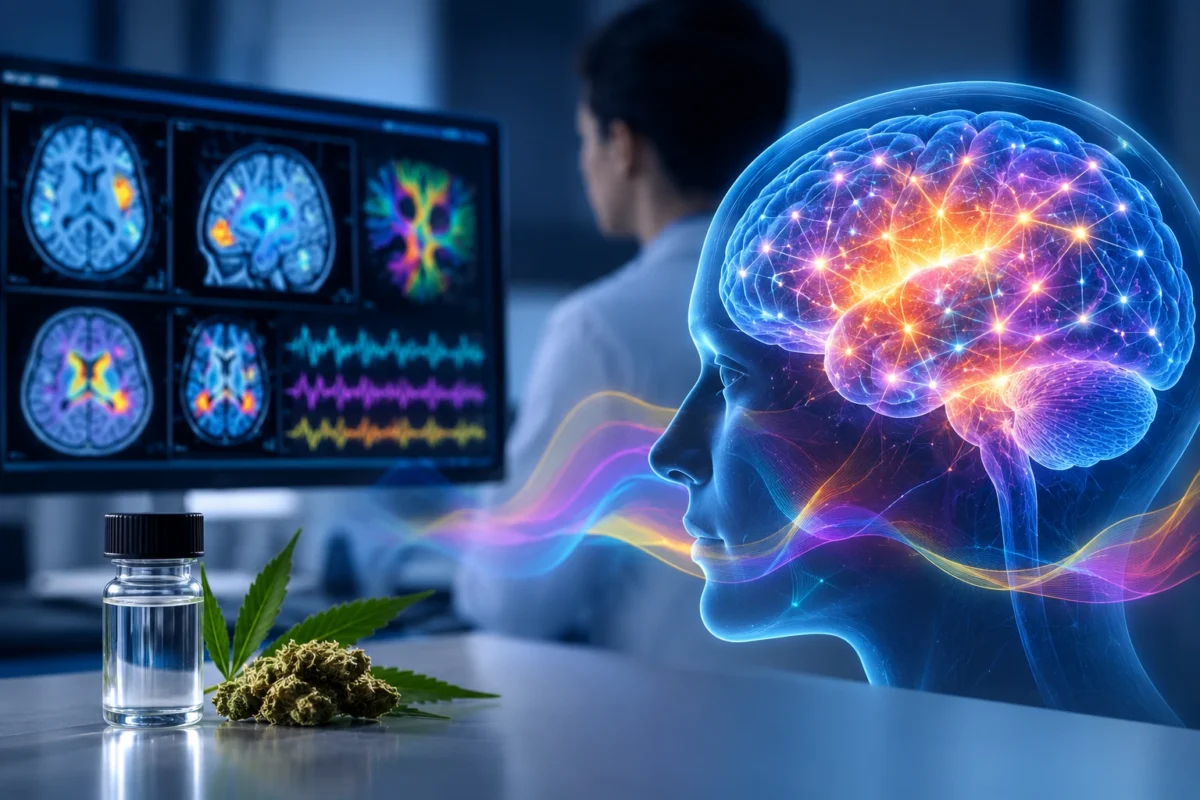
To conduct such research, brain imaging techniques are used on people under the influence of the drug. The purpose of such studies is not to prove the existence of alternate realities, but to uncover brain mechanisms which might create such experiences.
What Is DMT and How Does It Affect the Brain?
DMT is a naturally occurring psychedelic substance that works on the serotonin receptors, especially the 5-HT2A receptor. Serotonin is a messenger chemical involved in various functions such as mood, perception, and cognition.
The impact of DMT on these receptors leads to alterations in brain activity related to changes in sensory perception and consciousness. However, the link between alterations in brain activity and individual experience requires further investigation.
As opposed to waking state perception, which is predictable and consistent, psychedelic experience consists of quick changes in images, strange perceptions, and a different experience of time or one’s identity.
Scientists utilize DMT brain imaging to study how brain communication changes correspond to such experiences. This allows researchers to study biological mechanisms of perception while not making any assumptions about the objective nature of subjective experiences.
What Has Been Discovered by Scientists Through DMT Brain Imaging?
DMT-related brain scans studies reveal a number of alterations. This gives insights into how psychedelia experiences work although does not provide the full explanation.
A study from 2023 published in Proceedings of the National Academy of Sciences (PNAS) used the combination of fMRI and EEG to examine the impact of DMT on the brain in 20 healthy individuals. In this study, researchers saw enhanced brain networks interaction and alteration of normal patterns of brain activity. Some of the alterations correlated with the intensity of the experience.
The study shows that DMT could temporarily reorganize brain networks interaction. It doesn’t mean the brain stops working or consciousness is completely explained by science.
How DMT Could Alter Visual Perception
One of the most intriguing fields of research involves DMT’s impact on the visual system. Visual distortions can occur even with the eyes open and the environment unchanged.
A 2024 article in the journal NeuroImage has examined the effects of inhaled DMT on visual mapping of the brain’s primary visual cortex, known as V1, using MRI scans. The scientists observed increases in population receptive field sizes in parts of V1, especially in the peripheral visual field, under DMT influence.
In essence, the brain’s response to visual stimuli became broader in terms of the spatial region. The scientists speculate that the findings may shed light on some of the distortions people have described, including blurred peripheral vision and perceived alterations in the size and shape of the nearby space.
This is an important discovery, but it still cannot cover all visual effects produced by DMT. Additional studies are needed to elucidate how the changes in visual processing interact with other brain areas.
Why Do Scientists Study Brain Networks and Consciousness?
The brain is composed of interlinked neural networks that assist in processing sensory information, memory, emotion, and thought. They all work in combination to produce a seamless stream of consciousness and perception of reality.
During normal wakefulness, they are active according to certain patterns which ensure perception and cognition. Psychedelic drugs may temporarily change those patterns of activity thus influencing information integration in the brain.
DMT brain imaging research may provide scientists with means for studying these effects through the use of:
- Functional magnetic resonance imaging (fMRI) – which measures changes in brain activity by recording fluctuations in blood oxygen levels.
- Electroencephalography (EEG) – which records electric activity from the scalp and helps to trace fast brain rhythms changes.
- Joint techniques of brain imaging – which enable scientists to correlate changes in brain activity with subjective reports of the subjects.
Thus, scientists may study the correlation between changes in brain activity and changes in perception, time experience, and self-perception.
Why Do Scientists Study Brain Networks and Consciousness?
Does DMT Change What We Perceive as Reality?
DMT alters people’s perception of reality, yet there is one important thing to distinguish between altering perception of reality and changing reality itself.
The brain does not function as a camera recording the events taking place around us. Instead, sensory data is processed together with memories, attention, and other information. Any changes in these processes are likely to make people perceive the world differently.
Studies of DMT-related brain scans provide some evidence of alterations in visual processing and communications between brain networks responsible for psychedelic experiences. Yet, brain imaging cannot prove whether visions and sensations induced by DMT are a reflection of any independent or objectively real world.
The focus of the scientific research on DMT is in studying its mechanisms, rather than giving any philosophical explanation of its effects.
What Are the Limitations of DMT Research?
However, despite the promising results on how to understand perception, there are certain limitations to consider.
- Small sample sizes: Since many imaging studies in humans involve a small number of volunteers, their results require further investigation in larger samples.
- Unique experiences: Subjects may face difficulties describing unusual perceptions, thus complicating subjective reports measurement.
- Limited conditions: Research conclusions obtained under experimental conditions may not apply to real-life conditions outside laboratories.
- Open questions: Researchers have not fully understood how particular brain alterations cause certain experiences and whether they contribute to any lasting psychological consequences.
Despite the promising results obtained during DMT brain imaging, one cannot use them as evidence for DMT safety or effectiveness in treating psychological issues.
Safety Concerns
The use of DMT could result in various psychological and physical reactions such as fear, confusion, faster heartbeat, and high blood pressure. The reaction can be unpleasant, especially for some individuals with mental health risks.
Research that is controlled involves screening, supervision, and monitoring. These measures are crucial and cannot be taken for granted in unsupervised studies.
DMT should not be considered a treatment method for any disease because of what has been observed from the brain scans. People who have mental health problems should seek guidance from a healthcare professional regarding other treatment options available. There are different laws regarding DMT in various locations.
Frequently Asked Questions
What are the findings of brain imaging in connection with DMT?
Scientists found some evidence of alterations in vision and brain network interaction. More research is needed to link the findings to altered perception.
Can DMT affect the way a person sees reality?
Yes, DMT may alter perception to a large extent. Nevertheless, it cannot be proved that a person perceives a different objective reality with DMT.
What are the types of brain imaging used for DMT research?
Brain imaging methods, like fMRI and EEG, are utilized for scientific research. They are used to examine neural correlates of certain experiences.
Does DMT brain imaging prove that DMT can be used to treat mental conditions?
Not necessarily, since brain imaging only explains how DMT alters brain activity but does not prove the safety and effectiveness of the treatment.
Explore More About Cannabis and Your Health
Interested in learning more about cannabis, its effects on the brain, and the latest medical research? Explore our educational resources to make informed decisions about your health. If you’re considering medical cannabis, get your medical marijuana card by consulting a qualified healthcare professional to discuss your eligibility and available options.
>>Get Your Medical Marijuana Card<<
Conclusion
The process of imaging brain under the influence of DMT allows us to gain new insight into the functioning of our brain when processing visual information and creating the reality as we know it. So far, there have been some findings on the ability of DMT to affect visual processing and communication between brain networks, but much still needs to be investigated.
Sources
- Timmermann, C., et al. (2023). Human brain effects of DMT assessed via EEG-fMRI. Proceedings of the National Academy of Sciences (PNAS).
- Pais, M. L., et al. (2024). Rapid effects of tryptamine psychedelics on perceptual distortions and early visual cortical population receptive fields. NeuroImage.
- National Institute on Drug Abuse. Hallucinogens and dissociative drugs.